
Introduction
Interior design is the art and science of enhancing the interior of a building to create a healthier, more attractive, and functional environment for the people who use it. It involves much more than simply decorating a room with furniture and accessories. Interior design combines creativity, technical knowledge, and planning to make spaces comfortable, efficient, and visually appealing.
From homes and offices to hotels and restaurants, interior design plays a significant role in shaping the way people experience their surroundings. A well-designed interior can improve mood, increase productivity, and create a sense of comfort and well-being.
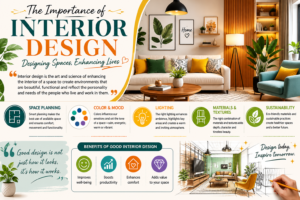
The Importance of Interior Design
Interior design is essential because the spaces we live and work in have a direct impact on our emotions and daily activities. A cluttered, poorly designed room can cause stress and discomfort, while a thoughtfully designed space can inspire relaxation and creativity.
Good interior design helps to:
- Maximize the use of available space.
- Improve functionality and convenience.
- Enhance the appearance of a room.
- Increase comfort and safety.
- Reflect the personality and lifestyle of the occupants.
- Improve mental and emotional well-being.
In today’s modern world, where people spend a large portion of their time indoors, creating comfortable and attractive interiors has become more important than ever.
Elements of Interior Design
Successful interior design is based on several fundamental elements that work together to create harmony and balance.
1. Space
Space is the foundation of interior design. Designers carefully plan how to use the available area efficiently. Proper space planning ensures that rooms are neither overcrowded nor empty.
2. Color
Colors have a powerful influence on emotions and mood. Warm colors such as red, orange, and yellow create energy and excitement, while cool colors like blue and green promote relaxation and calmness.
3. Lighting
Lighting is one of the most important aspects of interior design. Natural and artificial lighting can dramatically change the appearance of a room. Good lighting enhances beauty, improves functionality, and creates a welcoming atmosphere.
4. Texture
Texture refers to the surface quality of materials. Combining different textures, such as smooth glass, soft fabrics, and rough wood, adds depth and interest to a space.
5. Furniture
Furniture provides both function and style. Choosing the right size, shape, and arrangement of furniture helps create a comfortable and practical environment.
6. Patterns and Accessories
Decorative elements such as rugs, curtains, paintings, and cushions add personality and character to a room. They complete the overall design and make spaces more inviting.
Principles of Interior Design
Professional interior designers follow certain principles to create balanced and aesthetically pleasing interiors.
Balance
Balance refers to the distribution of visual weight within a room. It can be symmetrical, asymmetrical, or radial.
Harmony
Harmony is achieved when all elements of a room work together to create a unified appearance.
Contrast
Contrast adds excitement by combining different colors, textures, and shapes.
Rhythm
Rhythm creates movement by repeating patterns, colors, or design elements.
Emphasis
Every room should have a focal point, such as a fireplace, artwork, or a statement piece of furniture.
Proportion and Scale
Objects should be appropriately sized in relation to one another and to the room itself.
Different Styles of Interior Design
There are many interior design styles, each with its own characteristics.
Modern Style
Modern interiors feature clean lines, simple furniture, and minimal decoration. Neutral colors and open spaces are commonly used.
Traditional Style
Traditional design includes elegant furniture, rich colors, and classic decorative details.
Minimalist Style
Minimalism focuses on simplicity and functionality. The principle of “less is more” is central to this style.
Industrial Style
Industrial interiors use exposed brick walls, metal fixtures, and raw materials to create a stylish urban look.
Scandinavian Style
This style emphasizes simplicity, natural light, and comfortable living with soft colors and natural materials.
Contemporary Style
Contemporary design constantly evolves and combines modern trends with comfort and practicality.
Modern Trends in Interior Design
Interior design trends continue to change according to people’s lifestyles and preferences. Some popular trends include:
- Eco-friendly and sustainable materials.
- Smart home technology and automated systems.
- Open floor plans.
- Multi-functional furniture.
- Indoor plants and natural elements.
- Neutral color palettes with bold accent colors.
Sustainable design has become especially important as people seek environmentally responsible ways to decorate and furnish their homes.
The Role of an Interior Designer
An interior designer is responsible for planning and creating interior spaces that are both functional and beautiful. Their duties include:
- Understanding clients’ needs and preferences.
- Preparing design plans and layouts.
- Selecting colors, materials, and furniture.
- Managing budgets and timelines.
- Coordinating with architects and contractors.
Interior designers combine artistic creativity with technical knowledge to transform ordinary spaces into extraordinary environments.
Benefits of Good Interior Design
Investing in quality interior design offers numerous benefits:
- Improves quality of life.
- Increases property value.
- Enhances comfort and functionality.
- Creates a positive atmosphere.
- Improves productivity in workplaces.
- Makes efficient use of available space.
A beautifully designed environment can positively influence people’s emotions and create a lasting impression on visitors.
Conclusion
Interior design is much more than decorating rooms. It is a creative and practical process that shapes the way people live, work, and interact with their surroundings. Through careful planning, thoughtful use of colors and materials, and an understanding of human needs, interior design transforms ordinary spaces into comfortable, functional, and visually appealing environments.
As lifestyles continue to evolve, the importance of interior design will only grow. Whether designing a small apartment, a large office, or a luxury hotel, good interior design has the power to improve everyday life and create spaces that inspire, comfort, and delight.